Drawn in 2D to take into 3D is the question,
Will it work?
Will it function?
Will it stay intact?
Will it be pleasing to the eye regardless of structure?
Does it fit the requirement for its intended purpose?
Two Assumptions
That you know what you are doing,
That every thing will go to plain.
if only this was true, one motto that always seems to ring true is if some thing will go wrong it will, so prepare for the worse but hope for the best.
But it is said to be true that good things can come from an accidental mistake! Which can add to the project that you are intending to do. So never look at a mistake as a problem it may be a good mistake that has benefit and character to what you are doing
Two Refinements
Work around any problems incorporate them into your project
Ask many question to what may work or not, a bought any material that you use so that you know how they will behave.
Make a swatch if necessary with the material you use, practice with them and combine them to see if they are compatible.
Today we were given an exercise in assumption, with what we could see with the information given and if we had interpreted correctly.
Challenge Questions The information was of a guy living on the skirt of Los Angeles who needed to get to the other side for an appointment to obtain work, this travel would take 4 hours in peak hour travel, he did not wish to be late for this big opportunity, so with an assumption list of what to do was wrote down, which is as follows,
Assumptions
1 / Leave early
2 / Sleep on the bus
3 / Hire a helicopter, but who from, what cost, where was the nearest helicopter pad for landing
4/ Make sure you have an alarm clock 5 / leave early, when there is no traffic, book into a motel room for sleep and showering before going to appointment
6 / Leave early, sleep in car and wash at swimming pool or garage.
Solution- Myself would leave early when there is no traffic and sleep in a motel room that would be close to where the appointment would be.
Challenge Questions
1/ How would you get a whole chook egg into a milk bottle, with out breaking it?
Assumptions _ Crack egg let liquid pore into bottle through open neck
Solution – First boil the egg to make it hard, secondly peel the shell of the egg, and then light a flame {like a Bunsen burner/gas burner} under the bottle which is placed in a saucepan of water, hold stead fast the bottle with some tongs, place egg on opening of bottle, a vacuum will form and suck the egg through.
Challenge Questions
2/ Relatives – a doctor in London had a brother in Manchester, who was a lawyer-but thelawyer in Manchester did not have a brother in London who was a doctor. Why?
Assumptions- they were both sexes {hermaphrodite}
Solution– the doctor was the lawyers’ sister
Challenge Questions
3/ Bottled Money-If you put a small coin piece in an empty bottle and replaced the cork, how would you get the coin out of the bottle without taking out the cork or breaking the bottle?
Assumptions- take the bottom of the bottle of with a glasscutter then stick it back together
Solution – cut a slit in the cork like a moneybox, turn the bottle upside down and let the coin fall out.
Or push the cork in to the bottle
Challenge Questions
4/ The Restaurant Meal – Three women each have two daughters, and they all go into a restaurant for a meal. There are only seven vacant seats in the restaurant, but each has a seat for there self. How do they manage it?
Assumptions – put a plank between two seats which would then seat three people do this twice will give seating for 9 people.
Solution – there were enough seats because there was a grandmother who had two daughters who each had two daughters making seven people for seven seats.
DESIGN CHALLENGE/ REFLECT & REFINE
2D DESIGN CONCEPT
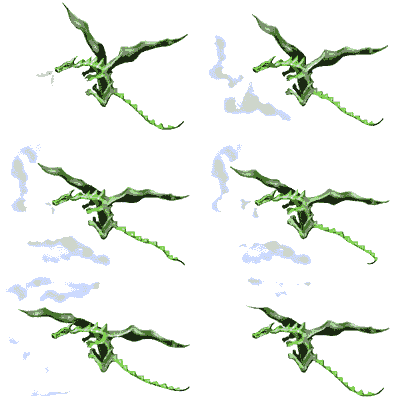
HAWK verses DRAGON
Mythical creators, that may be but not to sure of there existence for they seem real but are not, though based on those that are in nature and real I wish to achieve the mythical of a dream but not.
Do I do 1 or the other or may be both?????
Decisions decisions
ASSUMPTIONS
That it can be done
1/ Eagle in flight sculptured final layering flowers
2/ Dragon sculptured final layering flowers
CHALLENGE
1/ To keep it intact that it dose not fall to pieces
2/ To make it have spirit as though it is something that you may see but not to sure off
REFINEMENT
1/ Material chosen needs to be light but strong
2/ Time to be used wisely, know materials, this is wear swatch's need to be done for testing,
Dear Reader Sorry for the sleep though hope you enjoyed your nape, but my mind was in thought process on what to do next so many ideas have been traveling through my mind it was hard to choose one, though finally and hopefully on track. First of all I had to dig out the cobwebs not counting the spiders, to get some process of thought, off a creative nature. The two experiments of glass v flowers won over the idea of making a go-kart out of a bath that could be sailed as well as road worthy, for land use , decided that the go_ kart was a good idea but would need a longer time frame to complete, may be next life. To go with glass to make an object would be interesting but first I would need glass blowing class to achieve that idea, again hope prevails, so the windmills of my mind have been doing a turn. Decisions decisions??? Final though after a few zzzzzzzzzzzzz have decided on flowers with sculptor mind though the wheels of my mind are still turning anything can happen
R001 The NEW ERA of RAILROADING IT took ninety years to start the revolution that set the streamline train on its time-shattering career. You knew that revolution had come when you read that the fiery old iron horse had been stabled and in its place, trailing a string of coaches straight and smooth as an arrow’s shaft, was no grimy black engine but a strange new power car of “cobalt and Sarasota blue, golden olive and pimpernel scarlet.” Like an arrow the streamline shot across the country, caught the public imagination, beckoned a new generation that thought the railways outmoded and slow to come for a thrilling hundred-mile-an-hour ride in this aluminum bullet.
Operation of the 54.4 kg (120 lb) machine is simple; in fact it's so simple there are no controls except for an on-off switch. To go forward you simply push your body weight forward to tilt the machine. To back up, just lean back on the seat to tilt it backwards and back it goes. The farther you lean, the faster it accelerates. The gyro tells the ECU how much to accelerate and that in turn delivers the proper amount of current to the electric motors, one for each wheel.
CONCEPT TWO R004
http://www.slashgear.com/eos-triton-uses-gyroscope-technology-to-transport-you-on-one-wheel-2491493/ There are plenty of concepts out there about what our cars of the future will look like. And, if we care basing it off the past, we can safely assume that they’ll loose all their coolness in the design room floor. But, what are designers going to do when, if you lose the coolness, you lose the entire concept of the vehicle? That’s exactly what would happen with the Eos Triton, which is designed from the usage of a single wheel, and using technology that’s very real today.
R007 Recycled plastic bottles to be used to sail from San Francisco to Sydney. The crew of the Plastiki set off on their 9,000-mile voyage in a bid to make people aware of plastic pollution levels in the world's oceans.
CONCLUSION These are a few web sits that I visited after and during our class on drawing a concept for travel which would be eco friendly. It was a toss up between plastic bottles or a bathtub so have included a few extras.
Concept one PLASTIC FANTASTIC Garrard original design concept of an electric or solar two-seat vehicle with steering column and four wheels with a roll bar or sunroof, made from recycled materials
Concept two GYRO POWER Where our concept reminded me of the gyro wheel that was originally thought of around 1935, first mentioned in a Germany, there is an old magazine, which is called MODERN MECHANIX (President Roosevelt’s hobbies), which is attached to one of the web sites. This could be made of recycled rubber
Concept three PEDDLE POWER With the gyro and electric vehicle in mind I developed the bicycle concept that could be peddled by one, with a roof for shade.Made from fiberglass body with bicycle peddles
Concept four ROLLER TUB Bathtub transport, once the hole is plugged can be floated two seats place strategically for balance, the shower can hold a sail, one would need a break and a rudder to give direction, oars can be placed so it can be rowed when there is no wind, wheel to be able to use on land this also can be balance for water buoyancy, with these wheels on a axes and a pulley attached to either side to be able to turn to the left or the right to guide the tube in the direction that you wished to go. Made from reusable bath tubs , pram wheels, sail cloth. and wood
I chose a design that would be practical in carrying items that are needed with there own individual pockets on the out side that has easy access with different sizes.
The zip goes all the way round, when opened lays flat for storing larger drawings up to A5 size paper or A3 pads for sketching.
Hard plastic is inserted in the middle of a double fold canvas to keep it rigid with double stitching for re_ enforcing.
The canvas is mildew treated for damp or wet areas, the pockets can hold rulers , pen, pencils, brushes, even a Stanley knife.
This is to be included on a design that is suitable to past on each page of each weeks work to identify the task with the information wrote or typed either which is appropriate. Consideration to was given to
Shape Media Style
Some times the simplest is the right choice for one still needs to see the work on the page . The first design is done with tables , making each on command to fit content
The second one is done in Illustrator using selected tools and adding the same information required , where again the information can be added electronically or when it is required by hand. In answer to question posted by Mark Hilton These labels should be able to copy and past and increase in size but unable to write on electronically unless you have the original images. The style is chosen for impression and to hold information
3D use a three-dimensional representation of geometric data, that is stored in the computer for the purposes of performing calculations and rendering 2D images. Choosing a Cartesian coordinate system for a three-dimensional space means choosing an ordered triplet of lines (axes), any two of them being perpendicular.
Programs are used to engineer what object is required, scanned objects can be used to analyze a real world or environment to collect data on its shape and possibly its appearance
Rendering converts a model into an image either by simulating light transport to get photorealistic images, or by applying some kind of style, this is manly achieve using graphic program
Not all computer graphics that appear 3D are based on a wireframe model. 2D computer graphics with 3D photorealistic effects are often achieved without wireframe modeling and are sometimes indistinguishable in the final form. Some graphic art software includes filters that can be applied to 2D vector graphics or 2D raster graphics on transparent layers. Visual artists may also copy or visualize 3D effects and manually render photorealistic effects without the use of filters.
A three dimensional Cartesian coordinate system, with origin O and axis lines X, Y and Z, oriented as shown by the arrows. The tic marks on the axes are one length unit apart. The black dot shows the point with coordinates X = 2, Y = 3, and Z = 4, or (2,3,4).
The coordinate surfaces of the Cartesian coordinates (x, y, z) the z-axis is
vertical and the x-axis is highlighted in green. Thus, the red plane shows the points with x=1, the blue plane shows the points with z=1, and the yellow plane shows the points with y=-1. The three surfaces intersect at the point P (shown as a black sphere) with the Cartesian coordinates (1, -1, 1).
Reflection
Reflection or scattering is the relationship between incoming and outgoing illumination at a given point
Descriptions of this kind are typically expressed with a program called a shaders, a set of software instructions, which is used primarily to calculate rendering effects on graphics hardware
Describes how illumination in a scene gets from one place to another, typically for a set of points and obstacles, whether it is weak or on the edge, which ads or subtracts
The shaded three-dimensional objects must be flattened so that the display device - namely a monitor - can display it in only two dimensions; this process is called 3D projection.